
Inside the 'diploma mill' where the NIH's newest advisory council member got her degrees
Kristine Blanche, a licensed physician assistant and wife of acting attorney general Todd Blanche, holds degrees from a school a prosecutor and longtime researchers have called a 'diploma mill'

It was always going to be difficult for Montserrat to host a medical school.
One summer day in 1995, on the remote island about half the size of Washington D.C., residents awoke to a long-dormant volcano waking up with them.
Plumes of ash billowed from the Soufrière Hills. Flows of lava forced evacuation of the entire southern half of the Caribbean island, turning the capital town of Plymouth into a modern-day Pompeii.
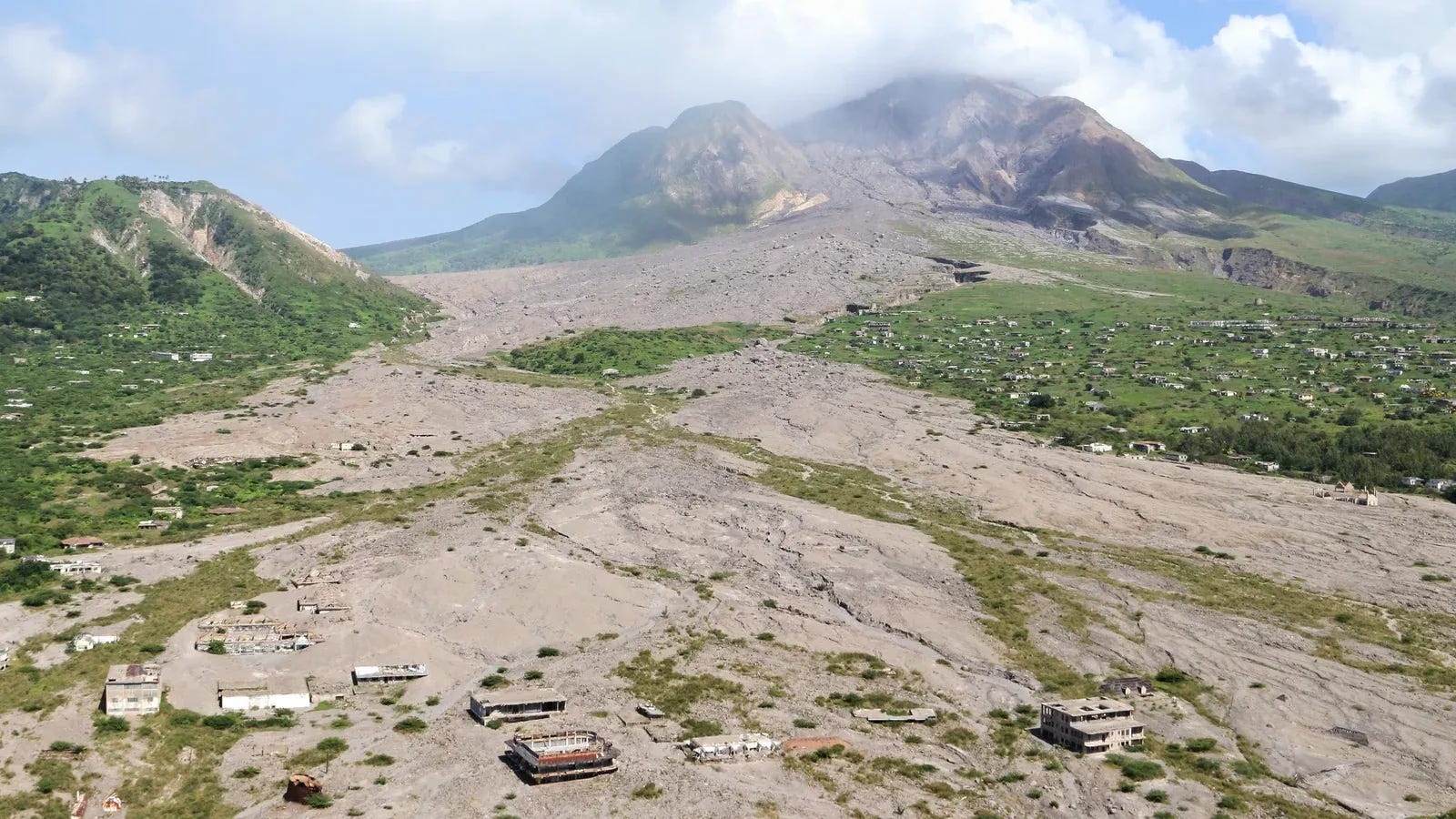
Then, in 2003 with the population now well under 5000 people, a new medical school was established: The University of Science, Arts and Technology.
But unfortunately for the remaining locals, hoping to restart their shattered economy, few students ever made the long trip to Montserrat.
Evaluators from the Caribbean’s regional medical school accreditation authority (CAAM-HP) conducted a site visit to the island in October 2011; the following June, the authority found the school “had not provided sufficient evidence to indicate that teaching activities were actually taking place in Montserrat,” and declined accreditation. It had first declined to accredit the school in 2007.
Later, a U.S. prosecutor wrote that a degree from USAT had “all the earmarks of coming from a diploma mill,” in the 2018 sentencing memo of one graduate who pretended to be a doctor and pleaded guilty to defrauding patients.
“The defendant paid money to USAT, made a few trips overseas, and received a diploma,” the prosecutor wrote.
From the school’s beginning, a small but dogged group of researchers identified USAT as just one in a series of related “diploma mills,” including the now-retired University of Illinois physics professor George Gollin.
Gollin built a second career investigating and exposing the operations, once defined by the Federal Trade Commission as companies that offer “degrees” for a flat fee in a short amount of time and require little to no course work.
Admission letters from the school priced a medical education at roughly $5,000 a semester, and quoted a graduation fee of “$900 for the first degree and $500 for each additional degree,” according to records made public through a civil racketeering lawsuit brought by former students.
Some USAT students were able to become licensed doctors in the U.S. But after the Educational Commission for Foreign Medical Graduates (ECFMG), the U.S. nonprofit that controls access to the U.S. medical licensing exam for graduates of offshore schools, found that the Montserrat school was actually operating inside the United States, and that USAT president Orien L. Tulp had falsely denied it, students who graduated in 2019 and later were barred from taking the crucial exam.
That shut the door to any future USAT students to become U.S. medical doctors and “effectively closed” the school, lawyers for Tulp said in court documents.
But this spring, one graduate vaulted into a position of power in American medicine: Kristine Blanche, the wife of acting attorney general Todd Blanche and a licensed physician assistant, joined a National Institutes of Health advisory council that reviews grants for complementary and integrative medicine.
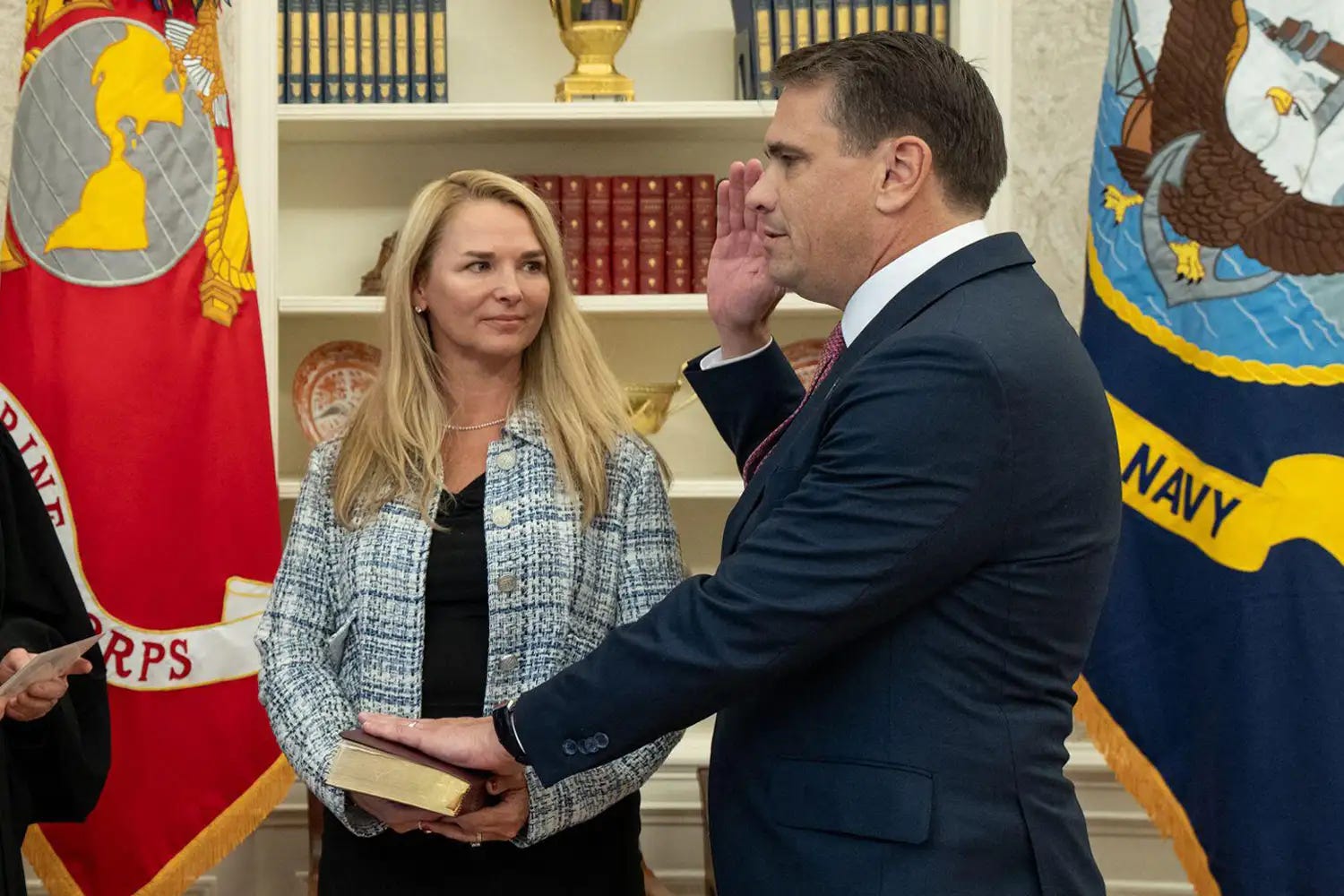
Blanche earned a Ph.D. from USAT between 2012 and 2014, and an M.D. between 2012 and 2015, according to her LinkedIn page. She also holds two B.S. degrees, one from the Catholic University of America and another from Long Island University, according to the page.
She has long run a small network of integrative health clinics in Florida and New York, where she uses the title “Dr.” on her own websites and social accounts. She is a board-certified physician assistant, licensed in New York and Florida.
She has also taken new roles as chief medical officer of Iris International, an investment firm, and its integrative medicine venture Karma Health, according to biographies on the websites.
“Your framing of my career reflects an apparent effort to discredit my legitimate medical education and professional career through selective, misleading, and inaccurate characterizations,” Blanche said in an emailed response to Source Material’s request for comment that included a list of questions about her degrees, practice, education at USAT and role at the NIH.
Her patients are “clearly informed” of her credentials, she said. Her use of “Dr.,” she said, is “standard and appropriate” given her Ph.D.
In the response, Blanche said she was prepared to pursue a defamation lawsuit, including punitive damages where applicable, if the story published materially false statements about her education, licensure or practice.
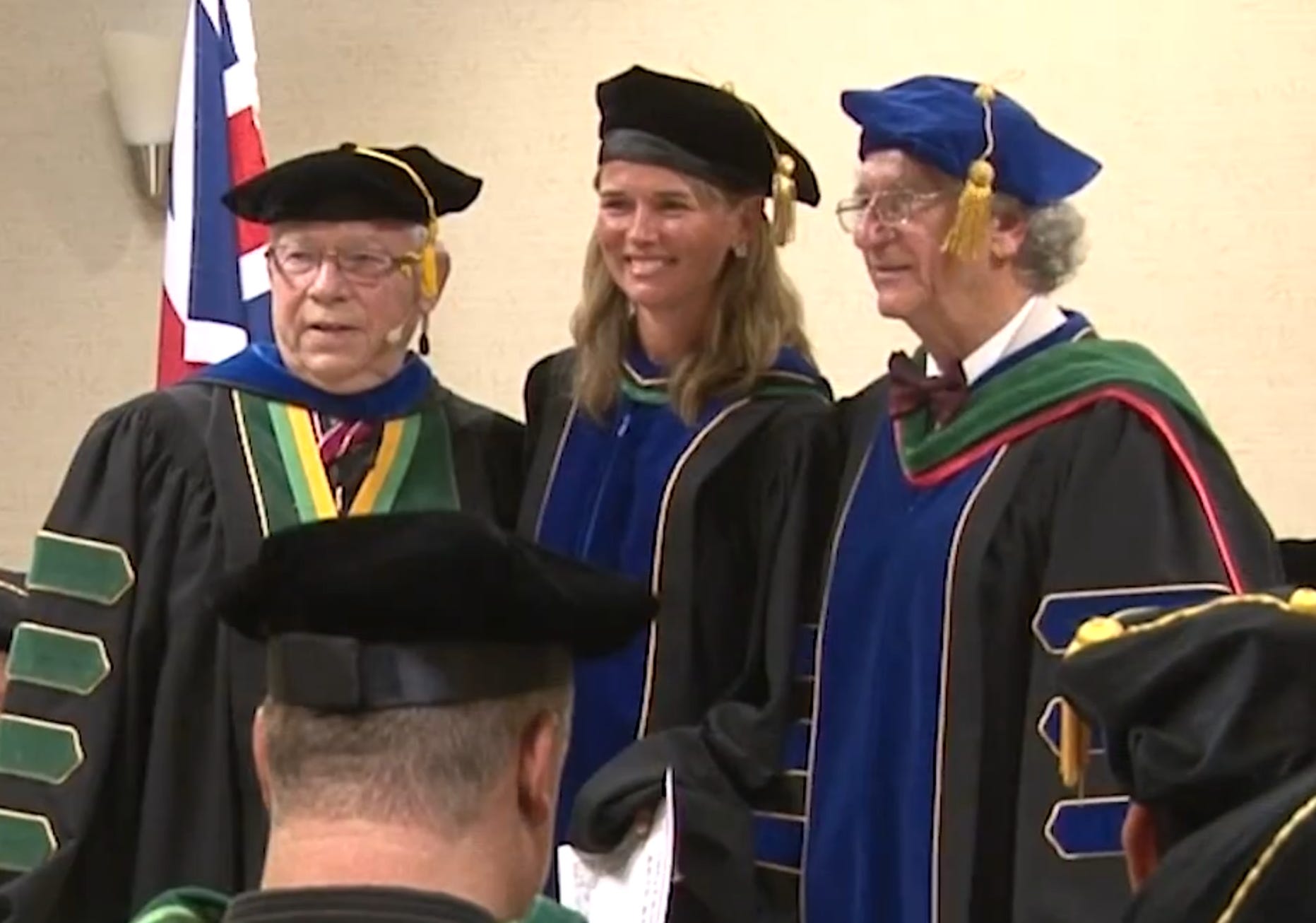
Her lawyer, Lex Urban, later acknowledged she also received an M.S. degree from USAT at the same time as her Ph.D. after being sent a video posted on YouTube of a 2014 commencement that shows Blanche receiving both degrees.
Urban did not confirm the start date for her M.S. and did not respond to questions about her Ph.D. research, the most detailed available version of which is on her personal site.
USAT graduates who earned degrees between 2003 and 2018, including Blanche, remain eligible to take the U.S. medical licensing exam.
USAT’s loss of ECFMG approval “occurred years after my graduation and has no retroactive effect on my awarded degrees,” Blanche said.
Though hundreds of students attended USAT, only a few dozen of them made their way through later exams and residency requirements to become licensed U.S. medical professionals, according to searches of state licensure databases. Most are in Florida.
Blanche’s appointment to the NIH council by Robert F. Kennedy Jr., secretary of the department of Health and Human Services was reported by STAT in April.
The appointment is an example of a recurring pattern in Donald Trump’s second presidential administration, wrote Dr. Robert Steinbrook, director of the health research group at Public Citizen.
“People who are connected are frequently rewarded, such as with an advisory council appointment,” Steinbrook wrote via email. “Kristine Blanche is yet another example.”
Todd Blanche’s financial disclosure, which was reviewed and certified by the Office of Government Ethics, reports his wife’s salary from Iris International. His ethics agreement, signed June 25 and posted July 3, commits him to step aside from matters affecting her health practice and, more narrowly, Iris.

Kristine Blanche said her council ethics obligations are “fully met through annual training and disclosures.”
Questions arose from early on
It started with a pop-up ad.
In the fall of 2002, Gollin watched his campus computers fill with spam ads for prestigious degrees for which nobody is turned down.
Instead of ignoring them, he inquired. A few days later, a salesman rang back and offered him $900 off if he’d buy the degree on the spot.
He looked up Parkwood University, the school that offered the degree, and found its other customers. One was a forensic psychologist who had sat in a clinical session with the parents of a murdered teenager. Another, Gollin said, held a fake doctorate and appointments at two California medical schools.
“That made me realize this is more serious than I thought,” Gollin said in an interview. “It wasn’t just a smarmy, amusing thing.”
Alarmed, he began publishing what he found on a university web server. The work became his University of Illinois faculty public service: community work that draws on a professor’s expertise rather than run-of-the-mill volunteering. He joined an informal network of researchers, including a higher-education official in Oregon and a retired FBI agent who ran the bureau’s “DipScam” effort.
“Who better than a professor at a university to evaluate the curriculum of various degree providers?” he said.
When it came to USAT, “It was immediately obvious that this was bogus,” Gollin said.
USAT popped up on Gollin’s radar not via its home base on Montserrat, a self-governing British overseas territory, but in Britain itself, and under a different name.
In a 2010 Stanford Law and Policy Review article, Gollin noted that an “accreditation mill” he was watching – a company that poses as a legitimate educational accreditor – certified two schools, the “University of Science, Arts and Technology Medical College of London” and the “Lady Malina Memorial Medical College,” both run by Tulp.
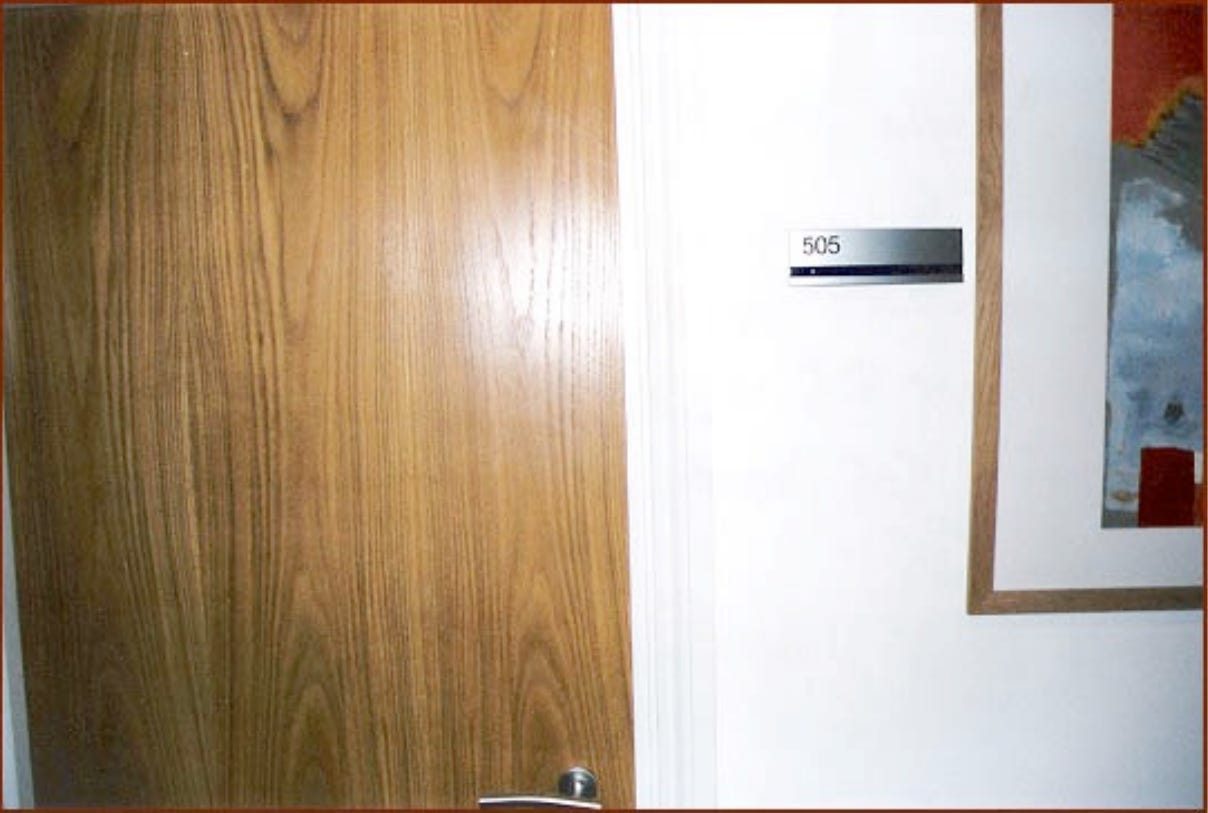
One of Gollin’s colleagues went looking for the Medical College of London. She found the Fleet Street address, took the elevator to the fifth floor and found “absolutely nothing.”
There was a career center, and a locked hallway, and behind it an unmarked door.
Gollin wasn’t the only one raising questions about MCL, nor the first. Times Higher Education reported in 2003 that MCL was advertising affiliations with King’s College London and the University of Greenwich that neither university had authorized.
“We are entirely bemused to see that they are claiming that,” a King’s College spokesman told the paper.
Twenty-one days after the Times Higher Education published their story, the government of Montserrat signed an agreement with “Medical College of London (MCL), University of Science, Arts and Technology (Montserrat) Ltd. (USAT).”
Tulp signed as “President, USAT, and Director, Medical College of London.”
Federal civil cases, including an unsuccessful lawsuit by Tulp challenging the sanction from the ECFMG, and a racketeering case brought by former students who accused the school of fraud, made public hundreds of pages of testimony, emails and other records that had not been detailed in the media before now.
The records show that some instruction did take place. Sworn testimony and exhibits describe proctored exams and cadaver anatomy sessions held at an outside Florida lab.
That some graduates passed the licensing exam, completed a residency and now hold U.S. licenses proves less than it seems, Gollin said.
American medical licensing is not “a completely effective, impermeable barrier,” and a determined person can get through the process despite getting a degree from a school like USAT, Gollin said.
“USAT was not teaching the standard load,” he said.
Gollin flagged the school’s suspect graduation math in an unpublished 2017 report for the U.S. Postal Inspection Service and shared with the Department of Justice.
He noted that a video the school posted of its 2014 commencement opens by announcing “the 11th annual commencement.”
USAT dated its founding to 2003, and was not able to start operating until around 2005 due to difficulties getting on to a World Health Organization list of medical schools, according to a local Montserrat news article Gollin reproduced in the report.
If USAT had been “offering a legitimate program of instruction, one would expect to see its first graduating class coming out four years later, in mid 2009,” Gollin wrote.
After Source Material interviewed Gollin for this story, he wrote to leaders at the Department of Health and Human Services, and the senior Democrats on the Senate judiciary and health committees.
“[USAT] is known to many of us in higher education as a diploma mill that provides fraudulent MD, PhD, and other academic credentials to its clients without requiring them to follow a proper path of studies,” Gollin wrote.
He asked that Blanche be removed from her council seat, and that the Senate reject her husband.
The Senate Judiciary Committee has yet to schedule a vote on Todd Blanche’s confirmation — where, after the death this month of committee member Lindsey Graham, a single Republican defection could block the nomination.
Where are they now?
Many graduates have almost no internet footprint. But several dozen hold active health care licenses — physicians, chiropractors, naturopaths, an acupuncturist, a nurse practitioner. For some, the USAT degrees sat alongside other training and were not the basis for the license.
At least 10 alumni have a mark on their record. Five were convicted or pleaded guilty, and two went to prison.
They posed as licensed physicians, forged exam scores, used a forged prescription, sold drug samples meant to be free for patients, and — while practicing without a license — stole from an elderly patient.
Maryland twice fined another graduate for practicing medicine without a license.
An Atlanta clinic operator who lists two USAT degrees built a chain of alternative-health companies that drew regulators in three states, The Atlanta Journal-Constitution reported in June.
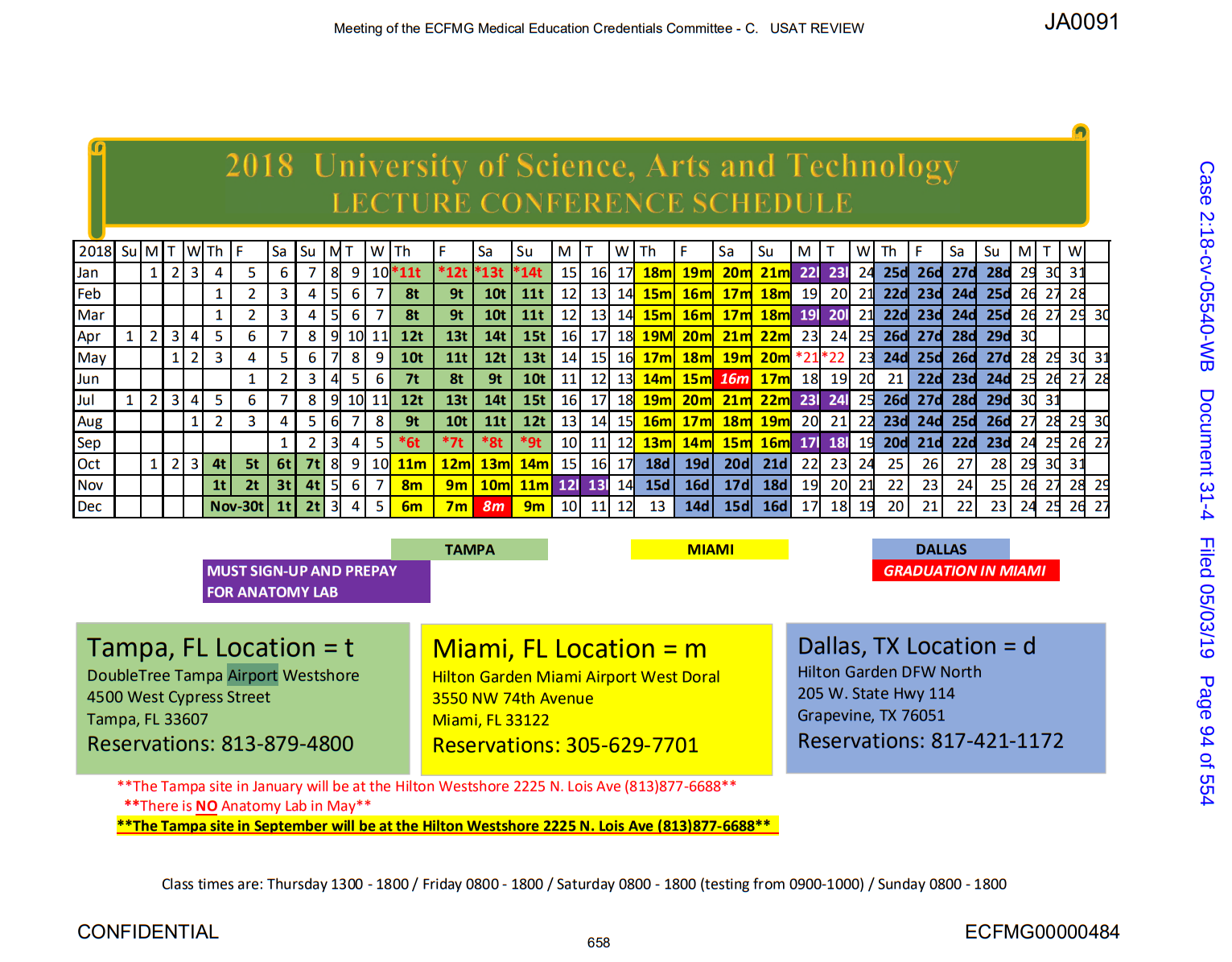
The program was “about 80 percent” online, Tulp testified in his case against ECFMG. Other instruction included weekend lectures at U.S. airport hotels — a DoubleTree in Tampa and Hilton Garden Inns by the Miami and Dallas airports. Students found and paid for their own clinical rotations.
In a separate case, former students from Puerto Rico sued under RICO, the federal racketeering law.
The case was unsuccessful — a judge dismissed the racketeering claim in 2023 as too short-lived to qualify, without ruling on whether USAT had defrauded anyone. The students are appealing.
To cover their education, students took personal bank loans, wired to a USAT office in Colorado. Lucero Rodríguez Fernández took no loan; she paid $3,925 from her savings.
“We spent a lot of money for nothing,” she wrote. “It was not only financial damages; it was also emotional.”
“Almost 5 years after and I am in constant worry, thinking, crying, nights without sleeping,” she wrote. “We trusted them.”
Tulp was educated in the 1960s and 1970s at the University of Vermont (UVM), where he eventually earned a Ph.D. He also rose to the rank of colonel in the U.S. Army Reserve, where the Senate took up his 1988 promotion in the Medical Service Corps, according to the Congressional Record.
On a 66-page C.V., he claims four degrees from the University of Vermont in Burlington, Vt., including a Ph.D. and an M.D.
Tulp did not appear in any UVM medical school yearbook reviewed by Source Material and the registrar’s office only confirmed three degrees issued by the university, none of them being an M.D.
George P. Einstein was USAT’s former dean of graduate studies. Blanche said in a 2020 webinar where she discussed her doctoral research that Einstein had told her he wanted her to do her Ph.D. with him.
Neither Einstein nor Tulp, or an attorney representing USAT in its most recent civil case, responded to messages seeking comment for this story.
Einstein left Blanche and others, including former investors who unsuccessfully sued him in 2007, with the impression he is related to the famed physicist Albert Einstein. The investors alleged in their complaint that he told them he was a grandson of the physicist, a claim that turned out to be false, they told the court. The suit was dismissed on procedural grounds.
In a 2024 interview with an African radio station, he called himself a cousin of the physicist.
George P. Einstein does not appear in any of the family trees held by the Einstein Papers Project at CalTech, the project’s senior editor Ze’ev Rosenkranz said in an email.
“Many individuals have falsely claimed over the years that they were Einstein’s offspring,” Rosenkranz said.
Among other ventures, Einstein is listed as research director of Mycomysticism, a registered religious organization that offers psilocybin ceremonies.
Listed alongside Einstein on the Mycomysticism page is Sergei Polonskii, who was once one of Russia’s wealthiest men and often called one of its most eccentric entrepreneurs.
Integrative medicine and its critics
Many USAT graduates, including Blanche, fan out into a branch of medicine that goes by several names — complementary, integrative, alternative.
One of the field’s most persistent critics is Dr. David Gorski, a breast-cancer surgeon and professor of surgery at the Wayne State University School of Medicine and the Barbara Ann Karmanos Cancer Institute in Detroit. He also edits Science-Based Medicine, a blog that has spent years cataloging treatments it calls “quackery.”
Take thermography, an infrared scan that maps heat patterns on the skin with a camera — no radiation, no compression, unlike a mammogram.
In her message, Blanche called thermography a “safe, non-invasive adjunctive screening tool,” not a substitute for a mammogram, and said its use in her practice is consistent with FDA guidance. Blanche’s doctoral research was on thermography and breast health, according to her site.
“It’s never been shown to be a reliable way of screening for breast cancer,” Gorski said. “It is not more sensitive than MRI or mammography.”
Integrative-medicine practitioners on the whole have often argued that they treat the whole patient — diet, sleep, stress, lifestyle — where conventional medicine only diagnoses and treats disease. Gorski said that pitch blames the wrong thing.
“What they are doing is conflating our profit-driven healthcare system with science-based medicine,” he said.
The rushed, disease-focused visit that patients resent comes from how doctors are paid — pushed to see as many patients as they can — not from the science, he said. He grants the complaint a “germ of truth.”
“Science-based medicine does tend to be more disease-focused,” Gorski said, and “not enough effort was focused on prevention.”
But the charge that doctors say nothing about diet or lifestyle, he rejects. “Any primary care doc will tell you what nonsense that is,” he said.
He offered himself as the proof.
A decade ago, Gorski said, he weighed close to 220 pounds and took two blood-pressure drugs at high doses. He started riding a bike and counting calories, and lost more than 50 pounds. Now, he rides 40 to 50 miles a week and takes one pill at a low dose.
“My story will tell you that over the last 10 years that that’s nonsense,” he said, of the idea that his profession ignores lifestyle. “But it’s hard. It’s freaking hard.”
Gorski has tracked the NIH center where Blanche now sits as an advisory council member for years.
In 2014, as it was being renamed the National Center for Complementary and Integrative Health, he wrote at Science-Based Medicine that the change would just be “polishing a turd.” The center, he said, “came into being more because of politics than because of science.”
That center’s advisory council is about to turn over. Every other regular member’s term expires this month, according to the council’s roster; Blanche’s seat runs to 2029, the longest of any appointed member.
Montserrat can’t catch a break
At first glance, a prospective medical student looking to learn in Montserrat has a new option.
The splashy social media pages of the Vanguard University School of Medicine began posting last January, inviting applicants.
Photos of smiling students and crisp ads announce that the school offers a “trusted education” and “global recognition.”
On second glance, it all falls apart.
Like USAT, Vanguard is not accredited by CAAM-HP. But a website that appears like the legitimate Caribbean accreditor says Vanguard is.
And like many things in 2026, much of the social media content is generated via artificial intelligence.
A stethoscope with two sets of eartips and no chestpiece is draped around the neck of one student doctor in a group photo.
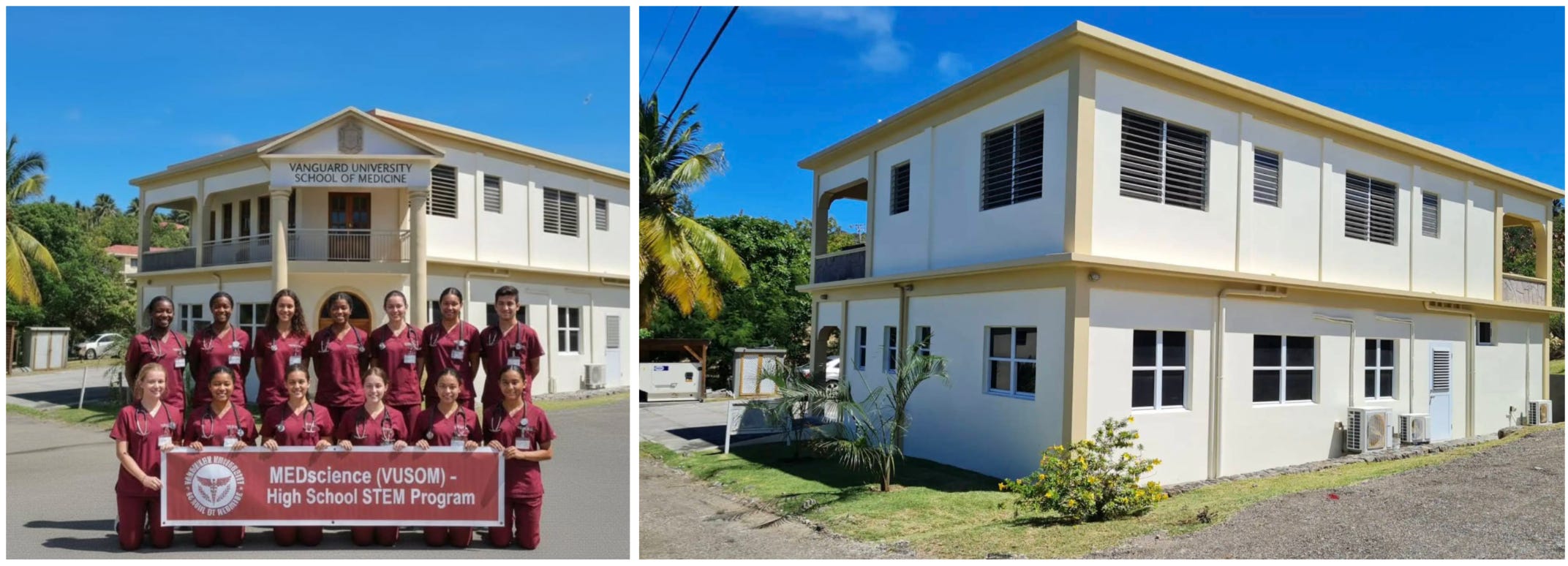
The campus building behind them, with “Vanguard University School of Medicine” emblazoned on the front with two stately columns, appears to be an AI-riff on a photo for a Montserrat Airbnb listing.
When Source Material reached out to the vacation rental hosts to ask about the listing and the possible use of their images, they confirmed the images were theirs and that they were aware of Vanguard.
“Unfortunately this seems to be a scam,” they wrote.
Great piece! Yet another example of a Trump appointee (and in this case a nepo wife) assigned to an important position for which she is evidently unqualified. But that is just my takeaway. The important thing about this article is that it simply lays out the facts, based on deep research, fairly and accurately, and lets the readers judge for themselves. It is also exceptionally well-written. This is what journalism ought to be.